Police are lying to you about Flock oversight
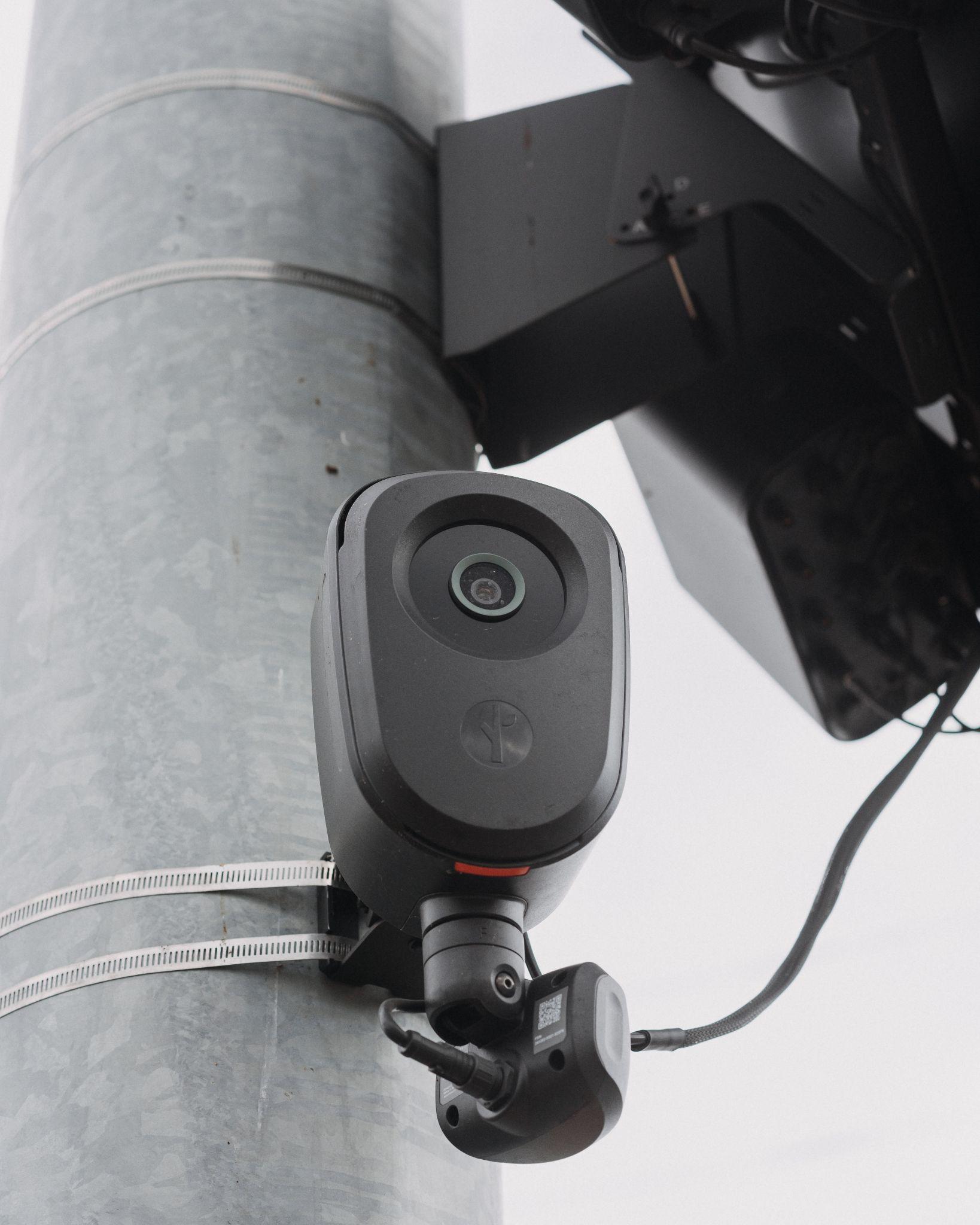
On a casual Sunday drive across Northwest Arkansas, you’ll notice a variety of new construction: businesses, houses, restaurants, roads and schools. What you may not notice are the inconspicuous black cameras.
Mounted high on utility poles, a growing fleet of automated license plate readers quietly photographs passing cars, scan their plates, and upload their locations — as well as information including their make, model and color — into a nationwide police database.
By the time you pull back in your driveway, your car may have been scanned more than a half-dozen times. A timestamped map of your entire drive is just a click away for any participating law enforcement agency, including an increasingly aggressive Immigration and Customs Enforcement agency and its partners.
These new cameras are sold by Flock Safety, an Atlanta-based startup valued at $7.5 billion as of March 2025. Flock brought to market a series of solar-powered, LTE-connected cameras that are significantly cheaper than legacy plate-readers and have one distinct advantage – their massive data-sharing network.
Through agreements with over 5,000 police departments and partnerships with companies like Amazon’s Ring, one of the largest manufacturers of video doorbell cameras, Flock, a private corporation, has enabled a never-before-seen level of coordinated surveillance. According to the company, Flock’s network performs more than 20 billion plate reads every month.
In public statements, Flock has pledged a commitment to transparency and responsible use of its network. The company has said Flock’s transparency portals that provide a limited view of data collected by its cameras are off limits for the purposes of immigration enforcement, traffic enforcement and harassment. Network search audits, more detailed logs that show information about specific database searches, tell a different story.
Through more than 100 Freedom of Information Act requests to Arkansas law enforcement agencies, I found that local departments are feeding license plate tracking data to federal agencies including ICE through fusion centers, state-run intelligence centers that collect and share data with federal agencies. I found records that indicate both local and federal agencies are using Arkansas Flock cameras to directly assist ICE. Additionally, I found evidence that shows Arkansas cameras are being used for traffic enforcement, stalking and racially biased policing.
In reporting this story, I encountered widespread resistance to basic transparency. Many Arkansas agencies put up unnecessary obstacles to requests, and in one case even sent officers to a Cabot resident’s home after she made a records request.
To tell this story, I need to talk about how invasive Flock actually is. A marketing pitch from Flock to the West Fork Police Department promises these features:
- “Community Network Access - The ability to request direct access to feeds from privately owned Flock Safety LPR cameras located in neighborhoods, schools, and businesses in your community, significantly increasing actionable evidence that clears cases.”
- “Nationwide Network - With the vast Flock Safety sharing network, law enforcement agencies no longer have to rely on just their devices alone. Agencies can leverage a nationwide system boasting 10 billion additional plate reads per month.”
- “Visual Search - Search footage using Vehicle Fingerprint technology. Access vehicle type, make, color, license plate state, missing / covered plates, and other unique features like bumper stickers, decals, and roof racks.”
- “Convoy Search - Unearth hidden connections by detecting suspect vehicles that frequently travel together. This tool is invaluable for investigating organized or serial crimes and identifying accomplices.”
Although the West Fork Police Department does not operate Flock cameras at the time of this writing, 82 other departments across Arkansas do. Records from the Arkansas Department of Transportation show more than 250 permitted automated license plate readers in use on state roads alone. Cameras on city-maintained streets or in parks and parking lots are harder to quantify.
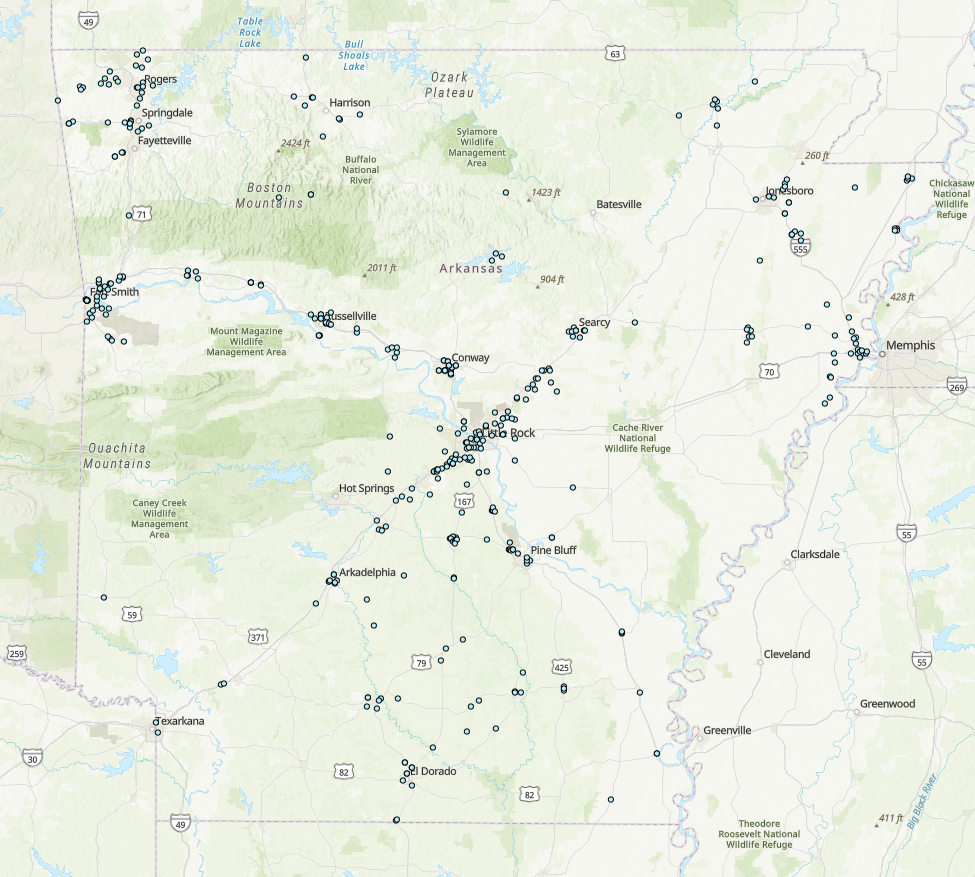
The most concerning findings come from the network sharing and network search audits I obtained. These reports reveal information about data-sharing agreements with other departments and agencies as well as information about the searches performed. Nearly every department that provided the network sharing report had data-sharing agreements with federal “fusion centers” like the Missouri Information Analysis Center. The MIAC is part of a network of fusion centers that “fuse” data from individual departments into databases that are accessed by federal agencies, including ICE. This data-sharing agreement opens a backdoor into a city’s Flock cameras, giving federal agencies access to live data.
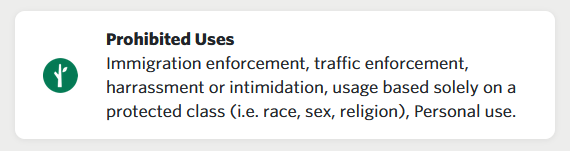
Every department that provided a network search audit included evidence that our community’s cameras are being used for immigration purposes. Those search audits revealed searches from outside or out-of-state agencies seeking information captured by Flock cameras within Arkansas. ICE investigations accounted for thousands of searches across state camera networks, for reasons like “ICE Surge,” “Illegal Alien,” “ICE Assist,” and “Immigration.”
When an officer makes a national search using Flock’s system, they are required to type a reason into the search field. A review of this data field yields some extremely concerning conclusions.
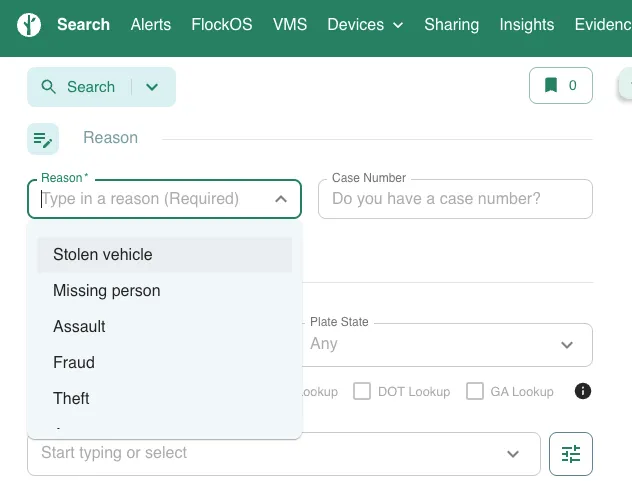
Take the city of Centerton in Northwest Arkansas. A network search audit that spans 11/10/2025 to 12/11/2025 shows that 733,078 searches were performed on Centerton cameras by law enforcement agencies as far-flung as the Florida Fish and Wildlife Commission, Nebraska State Patrol, and Lowndes County, Georgia. I found that officer J. Slo of Grand Prairie, Texas, ran a search for “gypsy crap,” in an obvious breach of Flock policy on racial profiling.
Over a one-month timespan from November 10th, 2025 to December 11th, 2025, the Centerton PD camera network was searched 95 times for terms related to ICE or immigration.
Several Arkansas law enforcement agencies, including police departments in Fort Smith, Cabot and Barling, have adopted policies stating that Flock cameras will not be used for “immigration-related investigations.” Yet the same departments appear in network search audits tied to ICE-related searches.
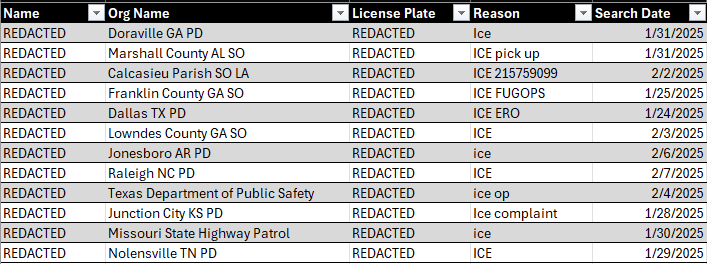
It is clear that even when a city has a policy limiting the use of Flock camera systems, network searches are not approved or reviewed. The number of searches is simply too high to ensure appropriate measures are in place to prevent abuse.
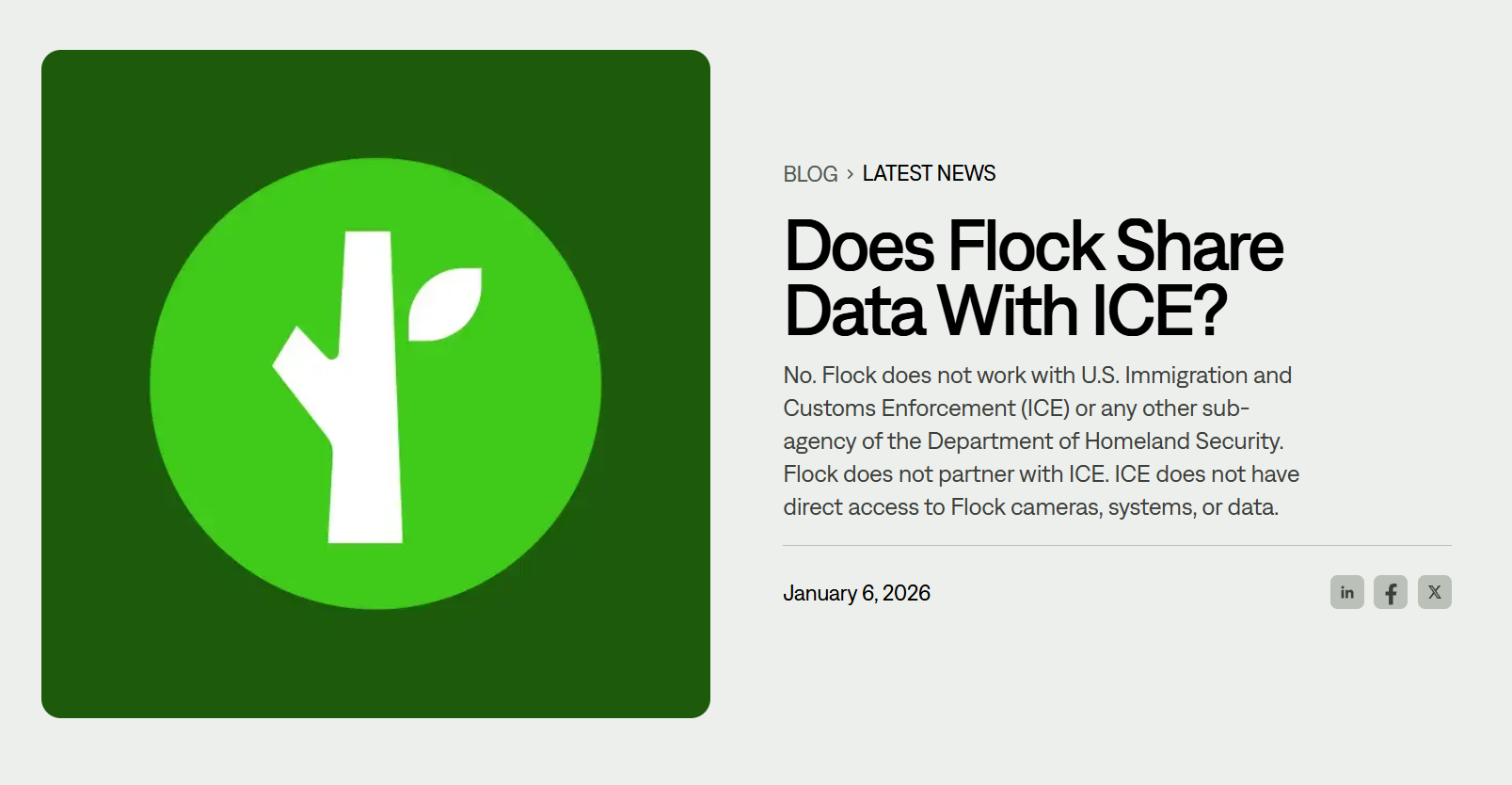
This leads us to the transparency issues. Flock Safety has spent a considerable amount of time reassuring the community that ICE does not have access to their camera systems. They specifically state “Flock does not work with U.S. Immigration and Customs Enforcement.”
This statement is extremely misleading because the data shows that ICE agents are still accessing Flock data via their local partners and fusion centers.
One example: a network search audit obtained through a public records request shows that the Benton County Sheriff’s Office ran searches using “ICE” as the reason for the search.

Individual departments have not been forthcoming with how this data is used or who has access to it. Of the 82 agencies in Arkansas with Flock camera systems, only three have set up transparency portals - a service Flock provides for free to all agencies who use their systems. Requests for records were frequently met with denials, hostility, fees, and in one case, a knock at the door.
Katherine Baker, a music teacher in Cabot who helped research Flock cameras for this story, received a home visit from the Cabot Police Department after submitting a public records request. After sending her original email, the Cabot PD decided to pay Baker a surprise visit in an attempt to confirm her identity. Although Arkansas law requires individuals to be state residents to submit a Freedom of Information Act request, it is virtually unheard of for a law enforcement officer to visit a requester’s home to verify residency, especially when the person has already provided a copy of a government issued ID.
“I really don't like presuming ill will of anyone, but I think it was, at best, a poor decision that could easily be construed as intimidation,” Baker said about the incident.
The Cabot Police Department has not responded to a request for comment.
Other departments, like the Searcy Police Department, insisted that they could not send the files through email. When I offered a file storage link they could use to upload the documents, they refused to use it. When I offered to have a local collaborator pick the documents up on my behalf, they insisted that I must make the six-hour round trip to pick them up in person. Many departments did not provide the network search audits in the original request and only provided them after receiving follow-up emails.
There is one boon to public transparency hidden within the system. Each individual member has access to an audit of all searches performed on their own camera network. Many searches are performed on all available cameras, which leaves that data subject to public records requests in every state.
Unfortunately, as of December 2025, Flock has removed officer names and plate information from the audit logs. The same data that uncovered harassment in cases like the one in Joplin is no longer available for public oversight. Federal agencies have caught on, too. One memo, produced by the Houston Investigative Support Center and Investigative Research Team and circulated by the FBI, claims that “self-styled privacy advocates” are compromising investigations through public information requests. The advice they give is to keep search reasons vague. This will make audits like the one in this article impossible.
Flock Safety claims its nationwide surveillance network helps solve crime and protect communities. This reporting shows a system that also feeds secretive databases, enables immigration enforcement through backdoors and resists transparency.
The question moving forward is, “Who will catch the abuses of mass surveillance if the means for public oversight is squashed?"